
AI-Powered Supply Chain Attacks: Why Vendor & Third-Party Risk Is Exploding
Have you ever wondered just how much trust you place in your vendors every single day? For most of us, it's automatic—your team relies on familiar software, cloud partners, and service providers to keep your business moving. But here's the truth: In today's world, your security is only as strong as your weakest link—and that link is under more pressure than ever.
This isn't a distant, theoretical risk. It's happening now. Generative AI is turbocharging cyber threats, and organizations everywhere are scrambling to keep up. Suddenly, those comfortable supply chain relationships feel like open doors.
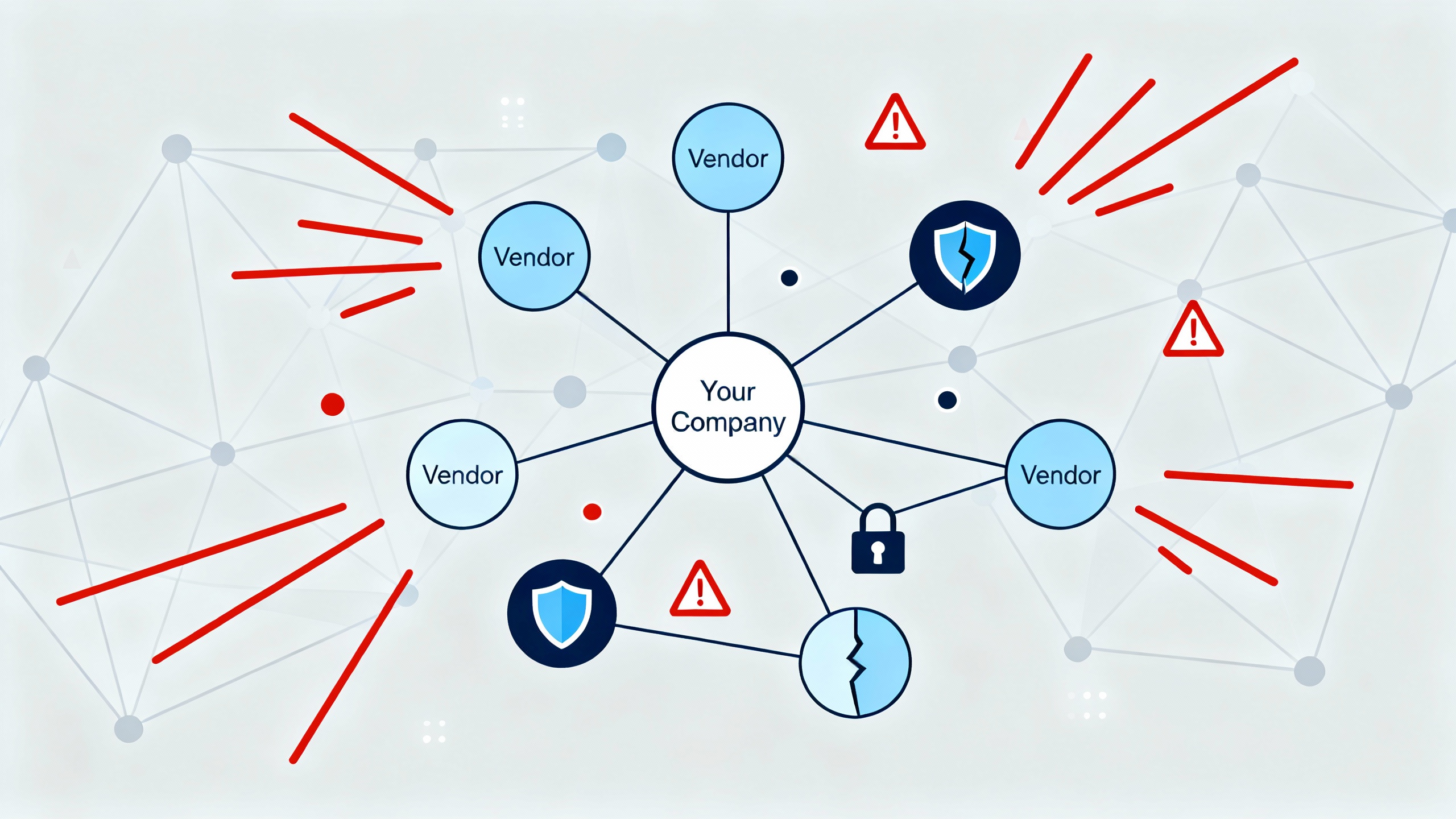
Supply Chains and AI: The Perfect Storm
Our digital supply chains stretch farther than ever before. One provider leads to another; a single SaaS tool brings ten open-source dependencies, and every new connection means more risk. Now, with powerful AI tools in the hands of both defenders and attackers, the game has changed. The perimeter isn't just your company anymore—it's every partner, supplier, and vendor you touch.
It can feel overwhelming, and for good reason. The numbers tell us just how serious things have become:
- 62% of organizations depend on third-party code that's already been breached—and most feel stuck, unable to replace it.
- Nearly half of companies were hit by a supply chain attack in the last year. For many, it meant losing millions and shaking customer trust.
- Supply chain attacks have surged over 600% since 2020. No one's immune.
- One breach at MOVEit's software spread across the globe, impacting 77+ million people and thousands of organizations. Can you imagine the phone calls, the panic, the reputational fallout?
How AI Is Driving New Attacks
We hear so much about AI helping defenders—but it's a two-way street. Attackers are using generative AI in frighteningly effective ways:
Social Engineering at Scale: Today's phishing emails aren't clumsy or riddled with typos. AI can craft messages so convincing, even security-savvy employees slip up. All it takes is one click from one vendor, and the dominoes start falling.
Fast, Automated Vulnerability Hunting: AI scans millions of lines of code in hours, finding weaknesses that humans might miss or take weeks to spot.
Malware That Evolves on Delivery: Imagine your vendor shipping an update. By the time it hits your system, AI has already tweaked the code to dodge detection.
Deepfakes for Fraud: What if you got a video call from your vendor's CEO asking for a funds transfer? With AI, that's now possible. The fake is so good—even your finance chief could be fooled.
Real Attacks, Real Impact
This isn't science fiction. These attacks have happened—and they've left thousands of businesses scrambling:
- The MOVEit disaster (2023) didn't start with end-users. The attackers hit the vendor first, causing a tidal wave across banks, governments, and healthcare.
- SolarWinds (2020) saw a trusted update weaponized, catching everyone off-guard. Think about it: You do everything right, and still, attackers move in through someone else's mistake.
- Even identity providers like Okta can be weak links. A single laptop, lost access, and the ripple effect is felt everywhere.
Time to Rethink Defense: Four Steps to Take Today
The old rituals don't cut it. Annual questionnaires, endless compliance checklists—they look good on paper, but don't stop a live attack. Security has to be constant, proactive, and focused on the whole supply chain. Here's how to start:
See Everything, Always:
Make a habit of mapping every vendor, subcontractor, and integration in your business. Not just the obvious—look at the hidden connections too.
Monitor, Don't Just Ask:
Don't wait for a vendor to tell you they're in trouble. Scan their public assets, domains, SSL info, and more. If something changes, you should know immediately.
Spot the Unusual:
Use your own AI to track behavior. If a vendor logs in from an unexpected country or time—ask why. These little flags can uncover big problems.
Assume Breach, Plan Ahead:
Work with the mindset that someday, a vendor will be compromised. Run drills, prep clear incident responses, and make sure everyone knows what to do—and who to call—when things go wrong.
Conclusion: Building Resilience Together
Supply chains aren't simple lines—they're tangled webs. And AI has given attackers the tools to strike anywhere, anytime. The lesson is clear: You can't wait and hope for the best. Get curious about your partners, dig deeper into your digital connections, and make attack surface management a priority. The future belongs to organizations that turn security from a checklist into a daily habit—strong, resilient, and ready for whatever comes next.